When hotel laundry managers face mountains of damp linens, one machine transforms wet fabrics into guest-ready textiles: the commercial tumble dryer. Understanding how this equipment works helps businesses optimise operations and maintain quality standards.
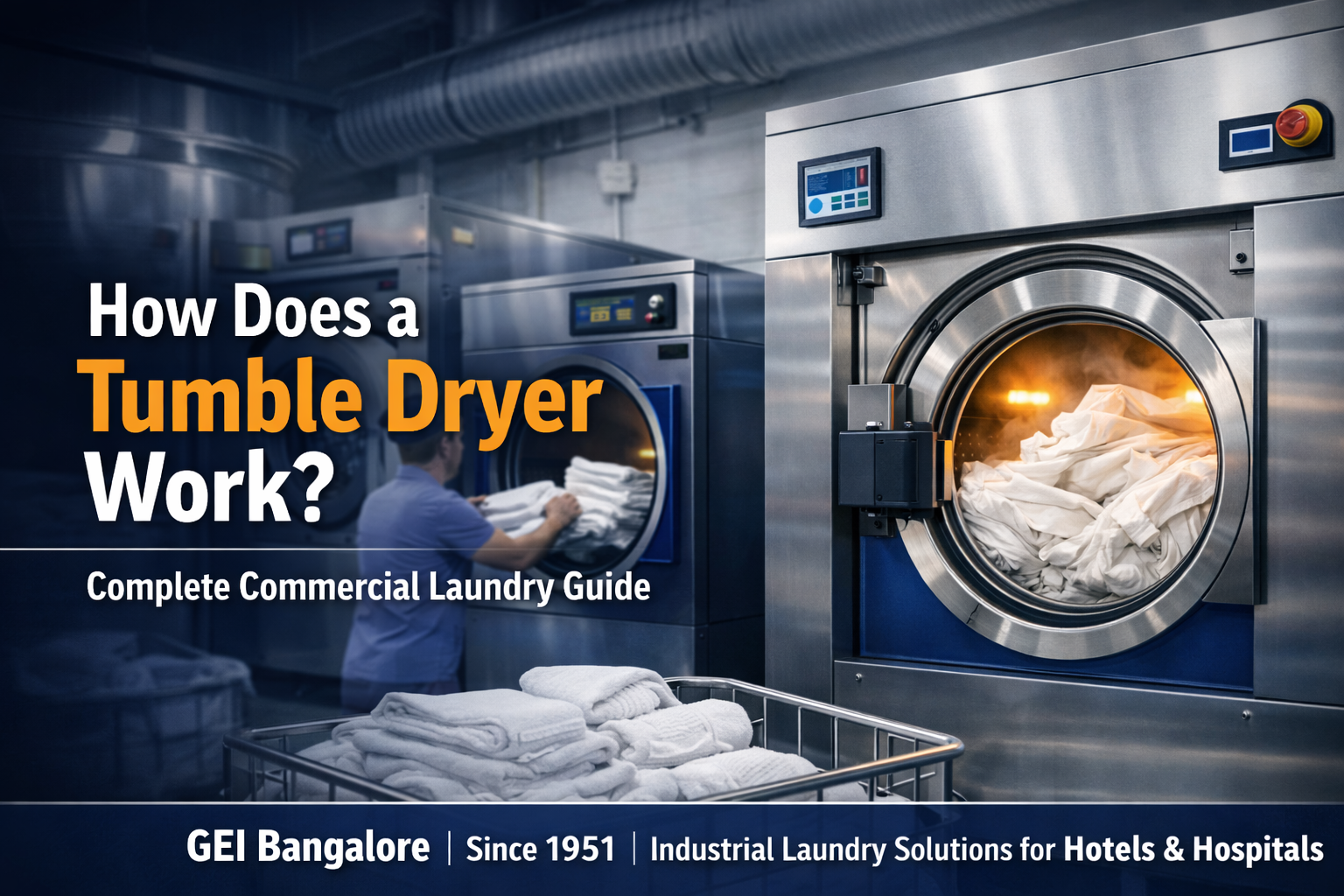
What is a Tumble Dryer and Why Commercial Laundries Need It
A tumble dryer removes moisture from textiles using heated air circulation combined with mechanical tumbling action. Unlike air drying, which depends on weather, commercial tumble dryers deliver consistent results regardless of conditions.
Commercial laundries serving hotels, hospitals, and industrial facilities process substantial volumes daily. These operations require reliable equipment that completes cycles quickly while maintaining fabric quality. The fundamental difference between domestic and commercial models lies in construction quality, capacity, and durability—commercial units feature heavy-duty components built for continuous operation.
Tumble Dryer Working Principle: The Science Behind Commercial Drying
The tumble dryer working principle combines three essential elements working in harmony.
Heat Generation and Air Flow
Commercial tumble dryers employ heating elements positioned strategically within the machine. The heating source—electric, steam, or gas—raises incoming air to optimal drying temperatures. At Gupta Electrical Industries, tumble dryers feature heat sources positioned at the top, with air drawn through the heating element into the drum chamber. The suction blower at the bottom creates continuous circulation, pulling heated air through textiles and expelling moisture-laden air.
Mechanical Tumbling Action
The rotating drum forms the heart of the tumble dryer operation. Specialized lifters mounted inside lift textiles upward, then gravity causes fabrics to fall through the rising heated air stream. This tumbling prevents bunching, exposes surfaces to heated air continuously, and creates air pockets enhancing evaporation. Proper rotation speed is calibrated to maintain optimal tumbling without fabric damage.
Moisture Evaporation and Exhaust
As heated air passes through tumbling textiles, it absorbs moisture from fabric surfaces. This moisture-laden air must be removed continuously. The exhaust system expels humid air while fresh air enters the heating chamber, creating a continuous flow that sustains drying. The rate depends on air temperature, flow volume, and textile surface area exposed.
Key Highlights:
- Efficient heat generation ensures faster drying
- Continuous air circulation improves moisture removal
- Mechanical tumbling enhances fabric exposure to heat
- Proper exhaust system maintains consistent drying performance
Note: Efficient drying depends on proper airflow, heat control, and balanced drum movement.
Key Components of Commercial Tumble Dryers
Stainless Steel Drum Construction
At Gupta Electrical Industries, tumble dryer drums are fabricated from AISI Grade stainless steel—chosen for durability and corrosion resistance. The drum incorporates precise perforations allowing heated air penetration while maintaining structural strength. These perforations facilitate air circulation and moisture escape efficiently.
Drum Lifters and Tumbling Mechanisms
Internal lifters welded to the drum interior create tumbling action essential for effective drying. These bars catch textiles during rotation, lifting fabrics upward before releasing them to fall through heated air. Gupta Electrical Industries incorporates lifters designed for effective tumbling across various textile types.
Heating System Components
Electric systems use resistance coils generating heat when current flows through them. Steam-heated systems circulate pressurised steam through coils, transferring thermal energy. Gas-heated models employ burners heating air directly. Each type offers distinct advantages—electric provides precise control, steam delivers efficient transfer when infrastructure exists, gas often provides economical operation.
Air Circulation System
The suction blower at the dryer’s base creates air flow driving the entire process. This blower continuously draws air through the heating element, through the textile load, and out through exhaust. Proper circulation prevents hot spots and ensures uniform drying.
Control and Safety Systems
Modern commercial dryers incorporate sophisticated controls managing temperature, timing, and safety functions. Temperature sensors monitor conditions continuously, preventing overheating. Safety interlocks prevent drum rotation when doors are open. Thermal cutoff switches automatically shut down heating if temperatures exceed safe limits.
Key Highlights:
- Stainless steel drum ensures durability and corrosion resistance
- Efficient tumbling mechanism improves drying performance
- Multiple heating options for flexibility and efficiency
- Strong air circulation ensures uniform drying
- Advanced safety systems protect equipment and users
Note: Proper component design and integration are essential for efficient, safe, and long-lasting dryer performance.
How Does a Tumble Dryer Work: Step-by-Step Process
Loading and Cycle Initiation
Operators load damp textiles without exceeding rated capacity. Overloading prevents proper tumbling and extends drying times. After closing the door, operators select temperature and time settings based on fabric type and moisture content.
Heating and Active Drying Phase
The heating element raises air temperature to selected levels. Once operating temperature is achieved, the rotating drum continuously tumbles textiles through heated air. Lifters catch fabrics, raise them, and release them to fall through rising heated air. As textiles tumble, moisture evaporates from surfaces. The blower system removes moisture-laden air while fresh heated air enters.
Moisture Removal and Completion
The exhaust system channels moisture-laden air away from the dryer. Many commercial dryers include cool-down phases at cycle end—heating shuts off while the drum continues rotating with ambient air, making textiles safe to handle and reducing wrinkling.
Common Tumble Dryer Not Working Issues and Solutions
Insufficient Drying Performance
When textiles emerge damp after complete cycles, overloading represents the most common cause. Reducing load size typically resolves issues immediately. Restricted air flow from clogged lint filters or blocked exhaust ducts also impairs performance. Regular cleaning maintains optimal air flow. Heating system problems manifest as extended drying times—malfunctioning elements or burners reduce heat output.
Drum Rotation Problems
Drive belt wear or damage prevents power transmission from the motor to the drum. Regular belt inspection and replacement prevent unexpected failures. Motor problems—electrical issues, bearing wear, or overheating—also prevent rotation and typically require professional diagnosis.
Overheating and Safety Shutdowns
Restricted air flow represents the primary overheating cause. When air cannot circulate freely, heat accumulates dangerously. Lint accumulation on heating elements creates insulation trapping heat. Routine cleaning prevents heat buildup and maintains safe temperatures.
Unusual Noises and Electrical Issues
Scraping or grinding noises suggest bearing wear in drum support or blower motor. Addressing bearing wear proactively prevents extensive damage. Control system malfunctions prevent proper cycle operation even when mechanical components function correctly. Verifying electrical supply represents the first diagnostic step when electrical issues are suspected.
Key Highlights:
- Overloading is the most common cause of poor drying
- Clean air filters and ducts ensure proper airflow
- Regular maintenance of belts and motors prevents breakdowns
- Prevent overheating by avoiding lint buildup
- Early diagnosis of noise or electrical issues saves repair costs
Important: Ignoring minor dryer issues can lead to major equipment failure, increased downtime, and higher repair costs.
Maintaining Commercial Tumble Dryer Performance
Daily Maintenance
Lint removal after each cycle prevents air flow restriction, reduces fire hazards, and maintains efficiency. Inspect drum interior for damage or foreign objects.
Weekly Tasks
Inspect exhaust ducts ensuring proper air flow. Check drive belts for wear patterns, cracks, or fraying indicating impending failure.
Monthly Activities
Deep clean dryer interior removing lint from areas around heating elements, blower housings, and air passages. Lubricate moving parts according to manufacturer specifications.
Annual Service
Comprehensive inspections by qualified technicians identify developing problems before failures occur. These should include electrical testing, heating system verification, safety checks, and wear assessment.
Tip: Regular maintenance improves efficiency, reduces downtime, and extends machine lifespan.
Choosing the Right Commercial Tumble Dryer
Capacity Considerations
Dryer capacity must align with washing equipment and daily processing volumes. Undersized dryers create bottlenecks while oversized equipment wastes energy and space. Processing volume varies by facility—hotels require quick turnaround, healthcare facilities need stringent standards, industrial laundries need maximum throughput.
Heating System
Electric heating offers installation simplicity and precise control but typically higher operating costs. Steam heating proves efficient when centralized generation serves multiple equipment types. Gas heating often provides the most economical operation where natural gas service exists. Energy costs represent significant operating expenses—comparing efficiencies and local utility rates identifies the most economical option.
Space & Installation
Physical constraints influence equipment selection. Dryers require clearance for exhaust ducting, connections, and maintenance access. Installation requirements vary by type—gas models need proper ventilation and professional installation, electric models need appropriate service capacity, steam units require connection to facility systems.
Operational Features
Modern controls offer programmable cycles, moisture sensing, and automation simplifying training and ensuring consistent results. Basic controls provide manual selection at lower equipment costs. Appropriate control complexity depends on operator skill levels and operational requirements.
Tip: Selecting the right dryer improves efficiency, reduces costs, and ensures long-term performance.
Why Choose Gupta Electrical Industries for Commercial Tumble Dryers
Since its establishment, Gupta Electrical Industries has specialised in manufacturing reliable, efficient tumble dryers for demanding commercial applications. Deep understanding of industrial laundry requirements ensures equipment meets the exacting standards of hotels, hospitals, and commercial laundries throughout India and beyond.
Engineering Excellence
Gupta Electrical Industries tumble dryers feature AISI Grade stainless steel drums engineered for long-term durability. Precision perforation patterns optimise air flow while protecting fabric integrity. Internal lifters create effective tumbling across diverse textile types. Heating systems—available in electric, steam, and gas configurations—deliver consistent thermal performance cycle after cycle.
Manufacturing Capabilities
World-class infrastructure, including CNC laser cutting, CNC turret punch press equipment, and CNC bending machinery, enables precise component fabrication. Advanced welding equipment operated by experienced technicians ensures structural integrity. Quality assurance processes verify performance specifications before equipment leaves the factory.
Comprehensive Support
Complete support throughout the equipment lifecycle—from initial consultation and specification selection through installation, operator training, and ongoing maintenance. Service technicians understand equipment thoroughly, enabling rapid diagnosis and resolution. Genuine replacement parts availability ensures maintenance restores equipment to original specifications.
Customization Engineering
While standard models serve most requirements effectively, some facilities need customised solutions. Engineering staff work with customers to develop configurations addressing unique operational requirements, space constraints, or processing challenges.
Trusted by Industry: Delivering reliable, high-performance tumble dryers for commercial operations across India.
Maximise Your Laundry Operations with Professional Tumble Dryers
Commercial tumble dryers represent essential investments for facilities processing substantial textile volumes. Understanding the tumble dryer working principle, recognizing common issues, and implementing proper maintenance ensures reliable performance year after year.
When tumble dryer is not working, systematic troubleshooting identifies causes quickly. Many problems respond to simple maintenance like cleaning lint filters or verifying proper loading. More complex issues benefit from professional service restoring full functionality.
Ready to Upgrade Your Laundry Facility?
Gupta Electrical Industries offers expert consultation, installation, and maintenance services for commercial tumble dryers. Leverage decades of experience to choose the right solution for your operations.
Book ConsultationContact Gupta Electrical Industries Today
Discuss your commercial laundry drying requirements with our experts. Our application engineers will help you choose the ideal tumble dryer configuration for long-term efficiency and performance.
Gupta Electrical Industries
Manufacturing Commercial Laundry Excellence Since 1951
#158, 10th Main, 3rd Phase, Peenya Industrial Area, Bangalore - 560058, Karnataka, India
(Near Pollution Control Board)
Elevate your operations with tumble dryers engineered for performance, built for durability, and backed by expert support.
Frequently Asked Questions About Commercial Tumble Dryers
Get answers to common questions about tumble dryer working principles, maintenance, and performance.
Commercial tumble dryers combine heated air generation through electric, steam, or gas heating; mechanical tumbling via rotating drum with internal lifters; and continuous moisture removal through exhaust air flow. Hot air passes through tumbling textiles, absorbing moisture which is expelled while fresh heated air continuously enters until textiles reach desired dryness.
The principle relies on maximizing moisture evaporation through optimal air-to-fabric contact. As the drum rotates, lifters raise textiles then release them to fall through rising heated air. This cascading action exposes maximum fabric surface area while preventing bunching. The combination of heat, air flow, and tumbling accelerates evaporation significantly faster than static drying methods.
First verify proper load size—overloading prevents effective tumbling and circulation. Check and clean lint filters and exhaust ducts as restrictions dramatically reduce efficiency. A confirmed heating system activates and maintains proper temperature. Inspect drive belts for wear or damage if the drum fails to rotate. For persistent issues, contact qualified service technicians for diagnosis of electrical, control, or mechanical problems.
Daily maintenance includes lint screen cleaning and drum inspection. Weekly tasks involve exhaust duct inspection and drive belt examination. Monthly deep cleaning removes accumulated lint from heating elements and air passages. Annual professional service by qualified technicians ensures all systems function correctly and identifies developing issues before failures. Multiple-shift facilities may require more frequent professional maintenance.
Gupta Electrical Industries manufactures tumble dryers engineered specifically for demanding commercial environments. Drums fabricated from AISI Grade stainless steel resist corrosion during continuous operation. Precisely perforated drum surfaces optimize air flow while internal lifters create effective tumbling. Multiple heating options—electric, steam, and gas—allow facilities to select the most appropriate system. Quality construction using advanced manufacturing equipment ensures reliable long-term performance.