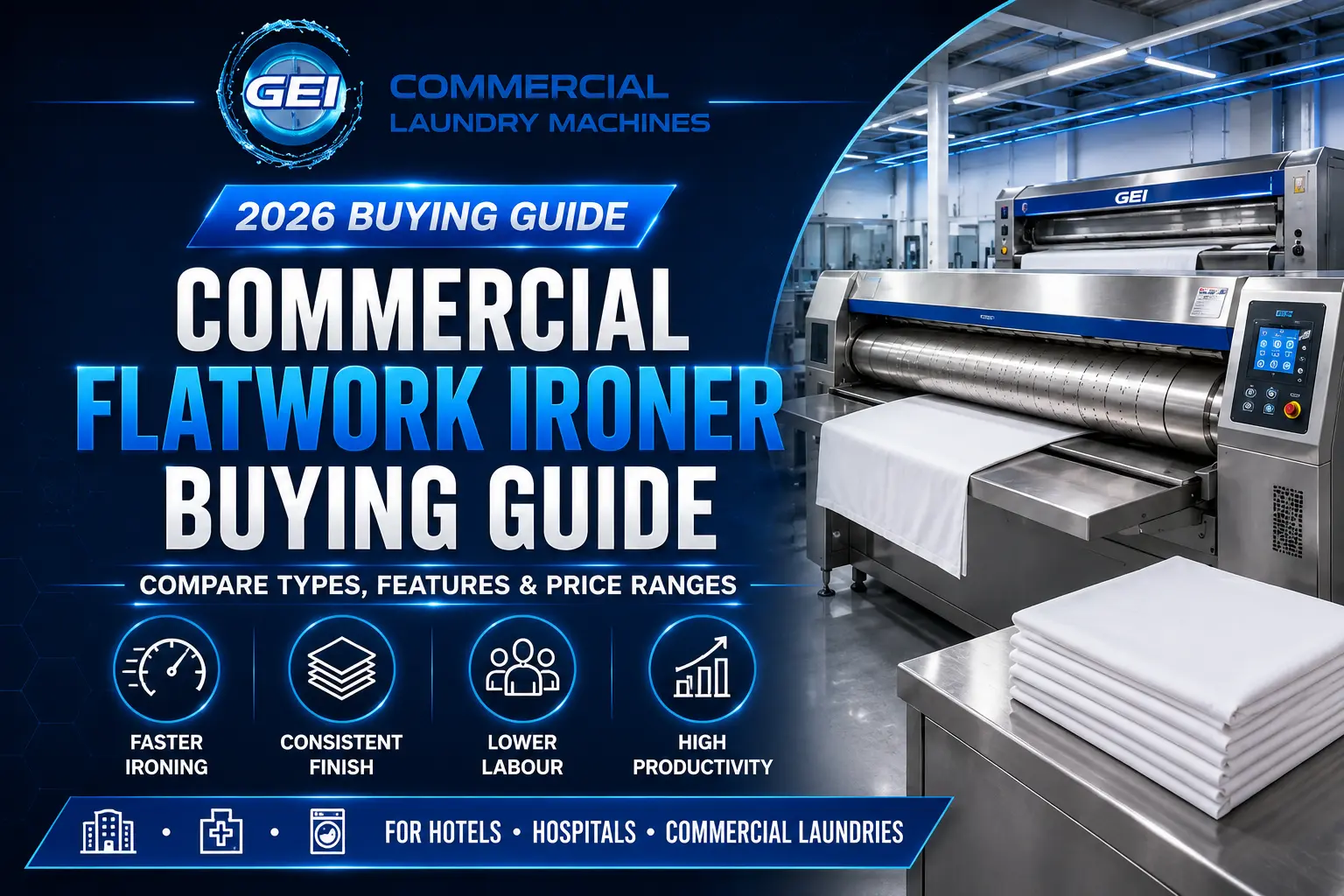
Commercial Flatwork Ironer Buying Guide (2026)

Choose the Right Finishing Machine for Your Laundry

Commercial flatwork ironer for high-volume laundry finishing
August 2026 15 min read By Admin Flatwork Ironer

If your laundry handles large volumes of flat linen, such as sheets, tablecloths, or pillowcases, a commercial flatwork ironer is one of the fastest ways to speed up finishing and lift quality. This guide walks through how it works and what drives flatwork ironer price in 2026, so hotels, hospitals, laundries, and institutions can choose the right machine for their volume and budget.

What Is a Flatwork Ironer?

A flatwork ironer is a machine that presses large flat items, such as sheets, table linen, and pillowcases, by feeding them between a heated roller and a padded, tensioned belt, removing moisture and wrinkles in one continuous pass. It's a mainstay in hotels, hospitals, commercial laundries, and institutions that process high volumes of flat linen every day, and it delivers a level of speed and finish that hand-ironing simply can't match at scale.

Why Should You Invest in a Commercial Flatwork Ironer?

Faster Ironing

Continuous feed processes far more linen per hour than ironing piece by piece.

Consistent Finishing

Even heat and pressure give every item the same crisp, professional result.

Reduced Labour Requirements

One operator can process large volumes, cutting staff-hours per item.

Improved Productivity

Faster finishing clears backlogs and speeds up the whole laundry cycle.

Factors to Consider When Buying a Flatwork Ironer

These are the specifications that separate the right machine from an expensive mismatch.

Ironing Capacity

Match throughput to your daily flatwork volume, with some headroom for busy periods.

Roller Size and Working Width

Roller diameter and width determine what sizes of linen you can process efficiently, from pillowcases to king-size sheets.

Heating System

Gas, electric, steam, or thermal oil heating each carry different installation needs and running costs.

Production Speed

Feed speed affects how many items move through per hour, which in turn shapes your staffing needs.

Energy Efficiency

Good insulation and efficient heating keep one of the biggest recurring costs in check.

Safety and Controls

Finger guards, emergency stops, and auto-reverse mechanisms are essential for safe day-to-day operation.

Maintenance and After-Sales Support

Parts availability and service response time protect your uptime far more than any single spec.

FactorWhat to Look ForWhy It Matters
Ironing capacityMatched to daily flatwork volumeAvoids bottlenecks in finishing
Roller size / widthSuited to the linen sizes you processDetermines efficiency and versatility
Heating systemGas, electric, steam, or thermal oilAffects installation and running cost
Production speedFeed speed matched to volumeShapes throughput and staffing needs
Energy efficiencyGood insulation, efficient heatingLower ongoing utility costs
Safety and controlsGuards, emergency stop, auto-reverseProtects operators during daily use
After-sales supportResponsive service, parts availabilityMinimises downtime

Swipe to view all table columns

Flatwork Ironer Price: How Much Does It Cost in 2026?

Flatwork ironer price depends heavily on capacity, roller size, heating system, level of automation, and manufacturer. As instructed, we're avoiding unsupported or outdated figures here. The ranges below are indicative only. Confirm current pricing for your exact configuration with our team before budgeting.

Machine Type / CapacityApprox. Price Range (INR)Typical Use
Compact single-roller₹2,50,000 – ₹6,00,000Small laundries, boutique hotels
Mid-capacity₹6,00,000 – ₹15,00,000Hotels, mid-size institutions
High-capacity multi-roller / industrial₹15,00,000 – ₹40,00,000+Hospitals, industrial laundries

Swipe to view all table columns

As with any commercial equipment, the sticker price is only part of the story: energy source, automation, and after-sales support all affect what one really costs to run over its lifetime.

Types of Commercial Flatwork Ironers

Single-Roller Flatwork Ironer

A compact design built around one heated roller, well suited to smaller operations with moderate flatwork volume.

Multi-Roller Flatwork Ironer

Multiple rollers working in sequence dramatically increase throughput, making this the choice for hotels, hospitals, and industrial laundries processing high volumes.

Heated Roller Flatwork Ironer

Describes how the roller itself is heated, whether by gas, electricity, steam, or thermal oil, and the right option depends on the utilities already available at your site.

TypeBest Suited To
Single-rollerSmall laundries, boutique hotels
Multi-rollerHotels, hospitals, industrial laundries
Heated-roller (gas / electric / steam)Chosen based on utility supply and volume

Swipe to view all table columns

Want help matching an ironer to your linen volume?

How to Choose the Right Flatwork Ironer for Your Business

Match Capacity to Volume

Size the machine to your daily flatwork load, including near-term growth, not just today's needs.

Consider Space, Energy, and Labour

Confirm your floor space, available utilities, and staffing before shortlisting models.

Weigh Long-Term Operating Costs

Energy use and maintenance shape the real cost of ownership far more than the purchase price alone.

You can browse verified specifications and current models on LaundryMachine.co.in to compare options against your requirements.

Common Mistakes to Avoid When Buying a Flatwork Ironer

Choosing Based Only on Price

The lowest quote often means higher running costs or weaker after-sales support.

Buying the Wrong Capacity

Undersizing creates a finishing bottleneck; oversizing wastes energy and space.

Ignoring Energy Consumption

Heating is the main running cost of one, so efficiency deserves real weight in the decision.

Not Checking Service and Spare-Parts Availability

A great machine with slow support becomes a liability the moment something needs fixing.

Frequently Asked Questions

Answers to common questions about commercial flatwork ironers.

It's used to iron large flat linen items, such as sheets, tablecloths, and pillowcases, quickly and consistently in hotels, hospitals, laundries, and institutions.

Flatwork ironer price depends on capacity, roller size, heating system, and automation. As a rough guide, compact models start around ₹2,50,000, with mid-capacity and industrial multi-roller machines priced considerably higher. Confirm exact figures with our team.

The best choice depends on your daily flatwork volume, available space, and utilities. A multi-roller machine suits high-volume operations, while a single-roller unit suits smaller ones.

Capacity, roller size and working width, heating system, level of automation, and manufacturer all influence the final flatwork ironer price.

Throughput varies significantly by model, roller width, and speed. Our team can confirm the exact capacity for any machine from the current catalogue.

Regular cleaning, checking the roller and belt condition, and following the manufacturer's servicing schedule all help extend the machine's working life.

Contact GEI Laundry

Choosing the right flatwork ironer comes down to matching capacity, heating system, and automation to your daily volume and budget, then weighing running costs over the life of the machine rather than just the price tag. Explore verified options on LaundryMachine.co.in, or talk to our team at GEI Laundry directly. For broader industry standards on commercial laundry equipment, the Textile Rental Services Association (TRSA) is a useful independent reference. Pair your ironer with the right commercial tumble dryers and commercial washer extractors to complete your finishing line.

Enquire Now!